Japanese Tattoos: Irezumi Motifs, Meaning and History
Irezumi from the Edo-period woodblock prints to today: how a piece is composed, what the main motifs mean, tebori, neo-Japanese and tattoos in Japan now.
Related galleries
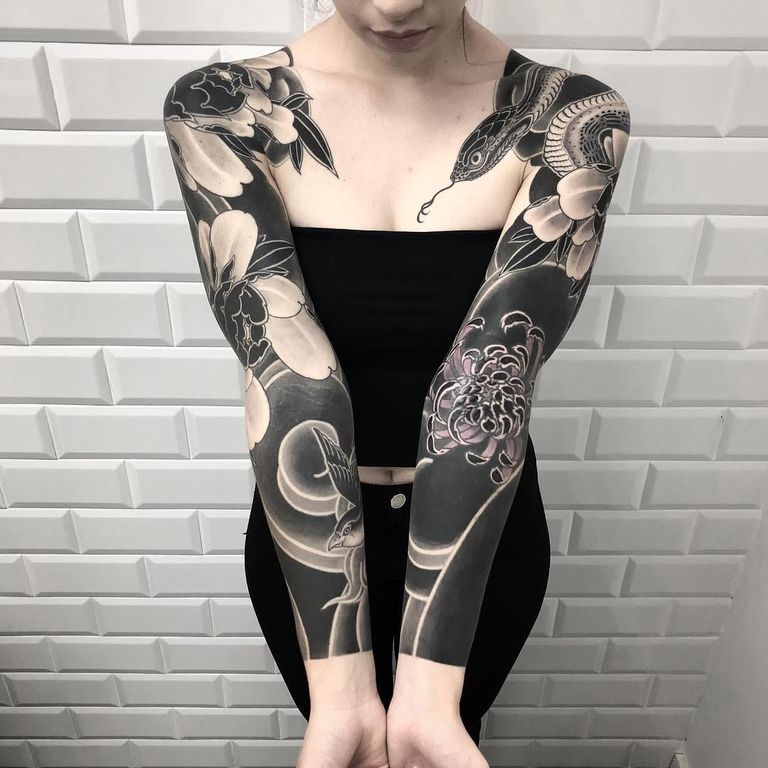
Japanese tattoos, or irezumi, are large pieces with heavy black outlines and smooth shading. One main subject sits in front: a dragon, koi, tiger, hannya mask or a hero from folklore. Seasonal flowers frame it, and a dark background of wind bars, clouds or waves ties it all together. The style took shape in Japan’s Edo period, when tattooers copied their designs from woodblock prints.
Summary
- Kuniyoshi’s prints of tattooed heroes, begun in 1827, set much of the look tattooers still follow.
- The style is drawn for big areas: sleeves, backs and legs.
- Many onsen, pools and gyms in Japan still turn away tattooed guests.
What defines the Japanese tattoo style
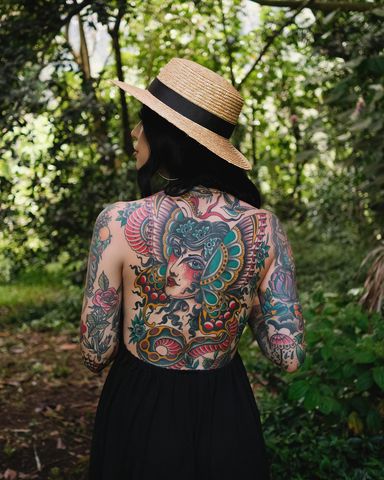
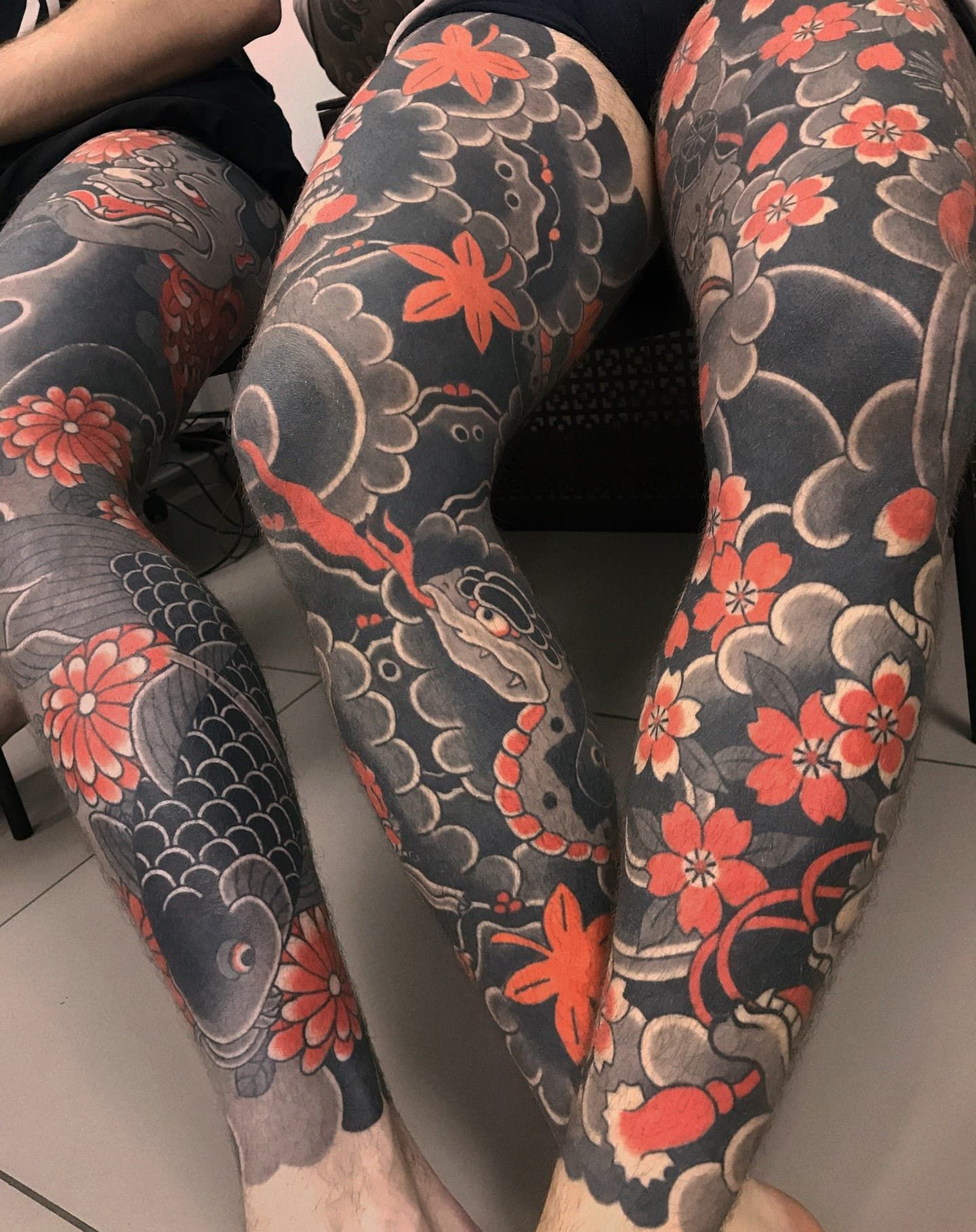
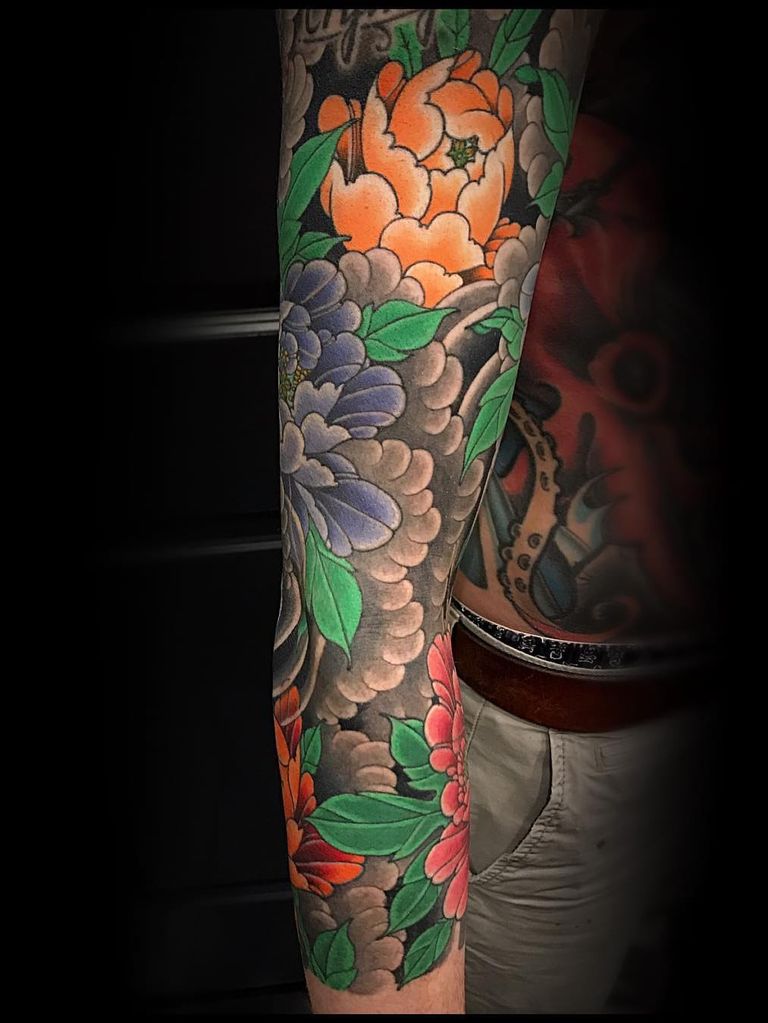
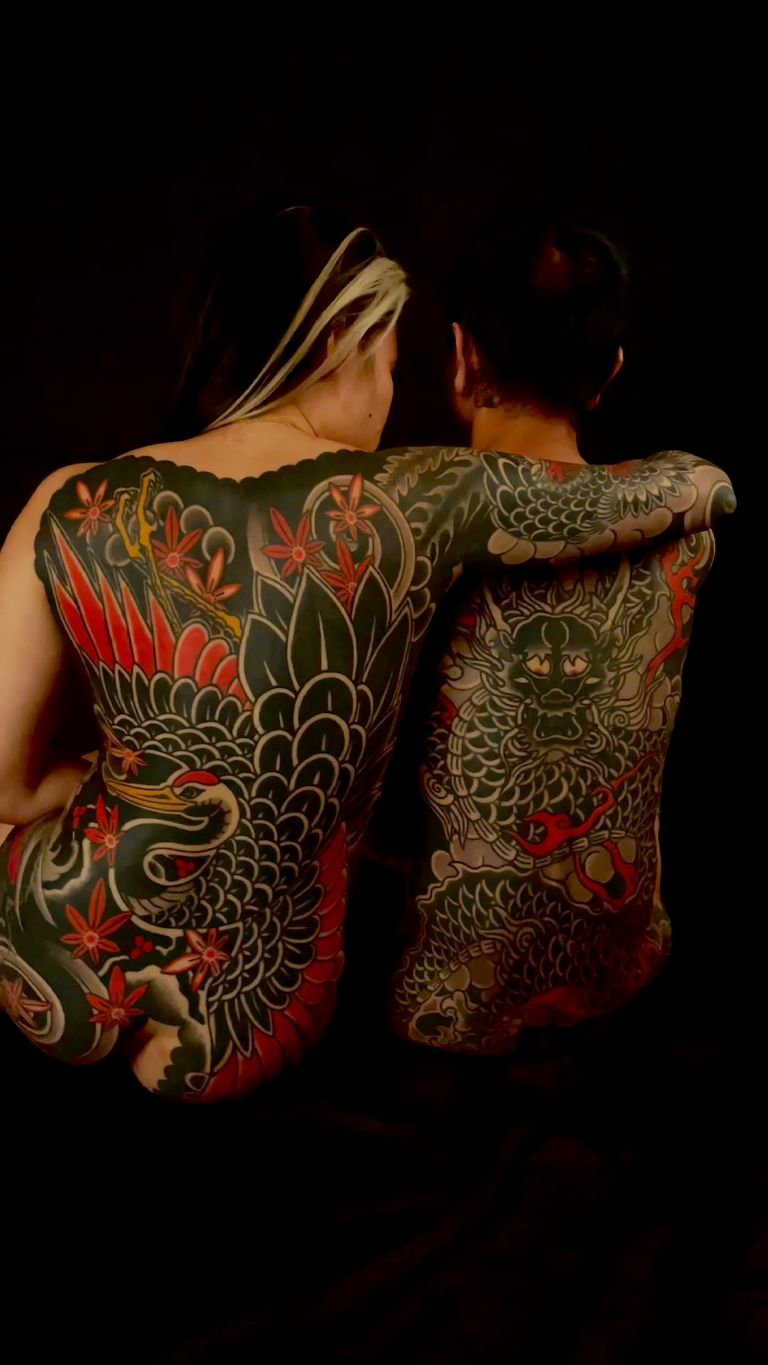
Three layers make a Japanese tattoo. The main subject sits in front. Behind it come flowers or leaves that set the season. Around both runs the background, called gaku (“frame”): wind bars, clouds, waves or rocks. In a sleeve or back piece, the background is what makes separate images read as one tattoo.
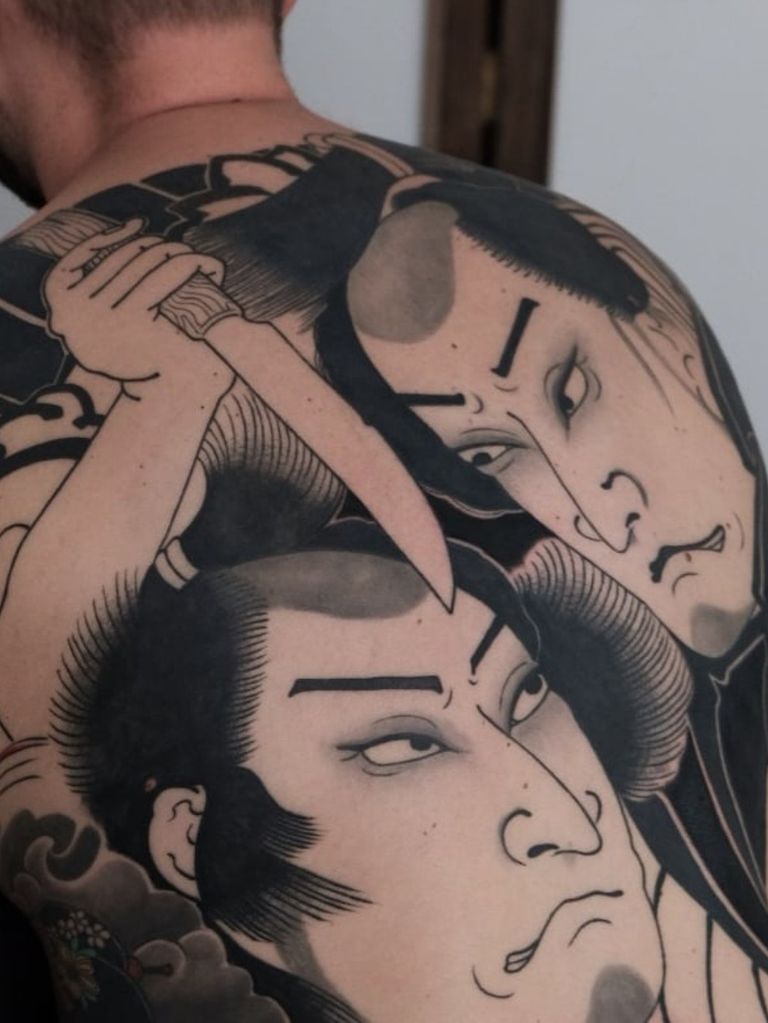
The lines are bold and even. The shading is a smooth black-to-skin gradient called bokashi. Older work used black, red and a few muted tones. Today’s palettes run wider, and black and grey is common too. Designs follow the muscles, and the piece ends in a clean, planned edge.
Flowers carry seasons. Cherry blossom is spring, peony early summer, and maple and chrysanthemum are autumn. A traditional artist may ask which season you want before choosing the flowers.
Where irezumi comes from
Irezumi means “inserting ink.” In the Edo period the word also covered the tattoos used to mark criminals. So decorative work also goes by horimono, or “carved thing.”
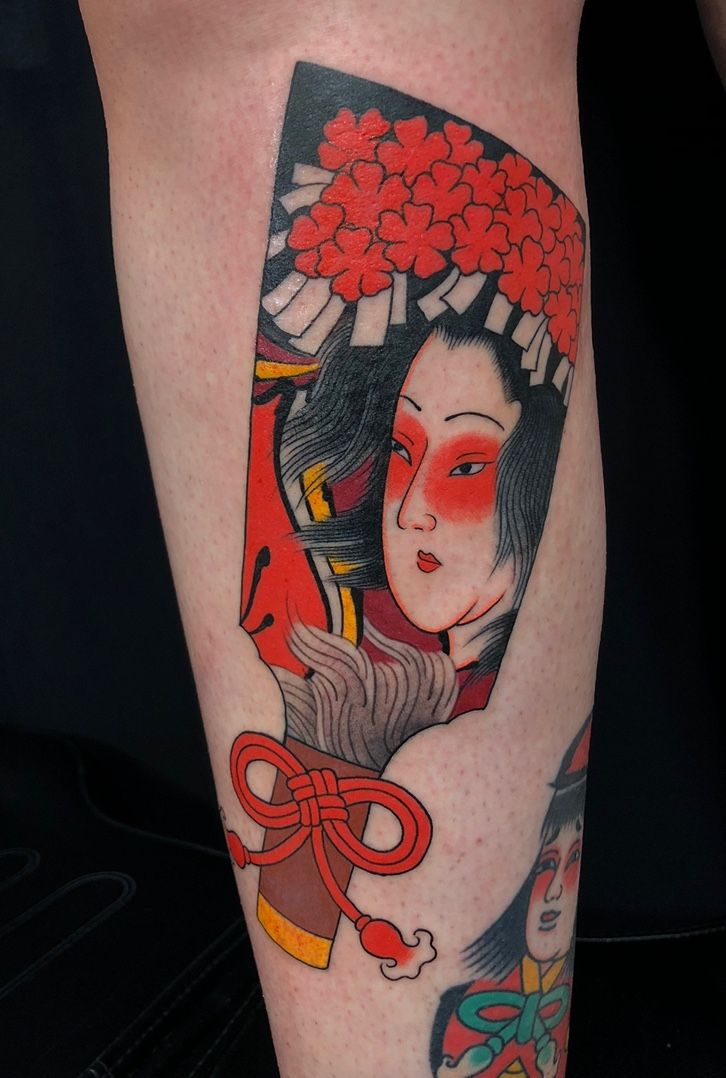
Decorative tattooing spread among working men in Edo, now Tokyo. The big push came from prints. In 1827 Utagawa Kuniyoshi began a woodblock series of heroes from Suikoden, a Japanese version of a Chinese novel. He drew several of them covered in tattoos, and customers wanted the same designs. Prints of kabuki actors added more. The dragons, tigers, waves and warriors from those prints still make up most of the style.
Japan banned decorative tattoos in 1872. Tattooers kept working out of sight, and the ban was lifted in 1948. After the war, the public came to link tattoos with the yakuza. That image still shapes how many people in Japan see them.
How a Japanese bodysuit is laid out
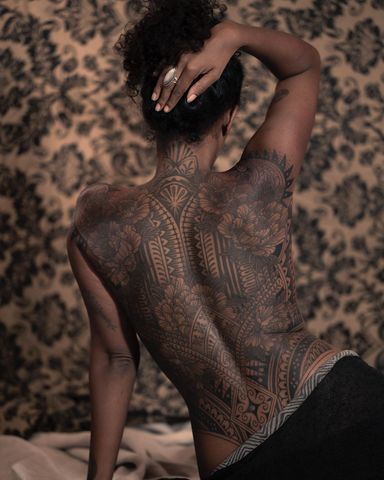
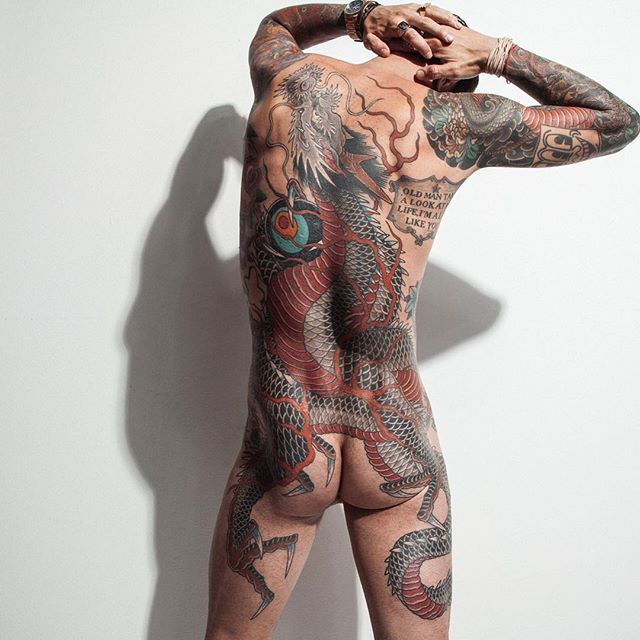
The traditional form is one tattoo over the back, buttocks, arms, chest and thighs, planned as one design. Artists in the tradition use Japanese names for the layouts:
- Munewari is a full suit with a strip of bare skin down the middle of the chest.
- Nagasode is a full sleeve to the wrist. Shichibu stops mid-forearm, and gobu stops above the elbow.
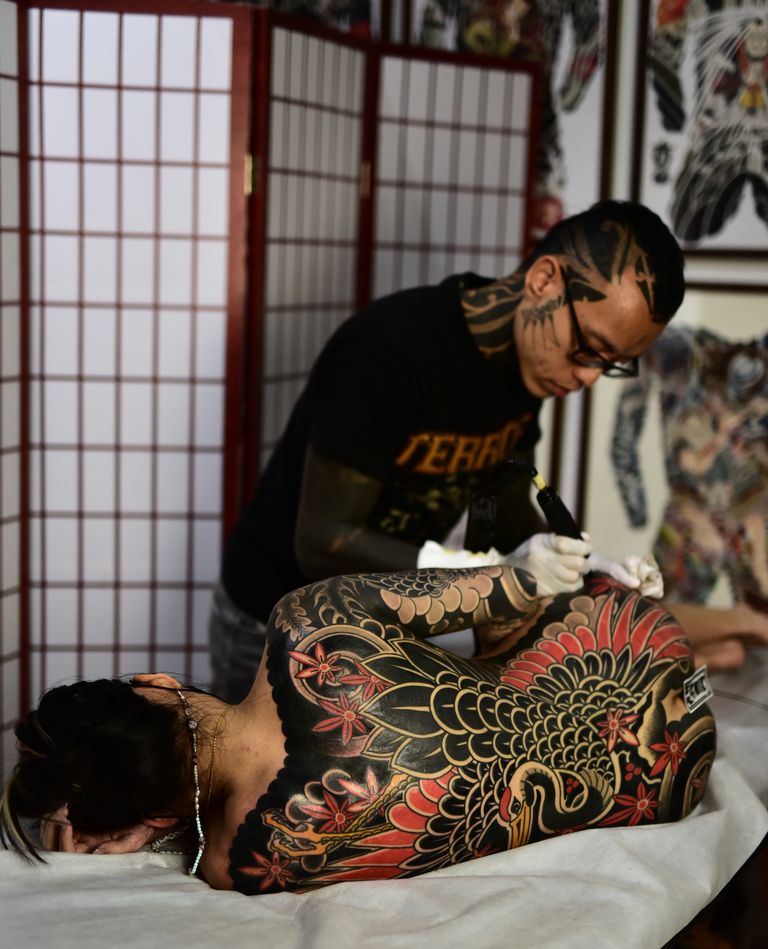
A full suit takes years of regular sessions. It’s built in stages, often starting with the back or a sleeve, so plan the first piece as part of the whole.
Japanese tattoo motifs and what they mean
Meanings come from legend, Buddhism and theater. These are the ones you’ll see most:
- The koi comes from a Chinese legend about a carp that swims up a waterfall and turns into a dragon. It stands for perseverance.
- The dragon is a water spirit linked to rain, rivers and the sea. It’s read as wise and protective.
- The tiger stands for strength and courage and is said to ward off evil. It’s often paired with the dragon as its rival.
- The hannya is a Noh theater mask of a woman turned into a demon by jealousy. People wear it as a charm against bad luck or as a warning about obsession.
- The foo dog is the guardian lion of shrine and temple gates. It usually comes with peonies, the king of flowers.
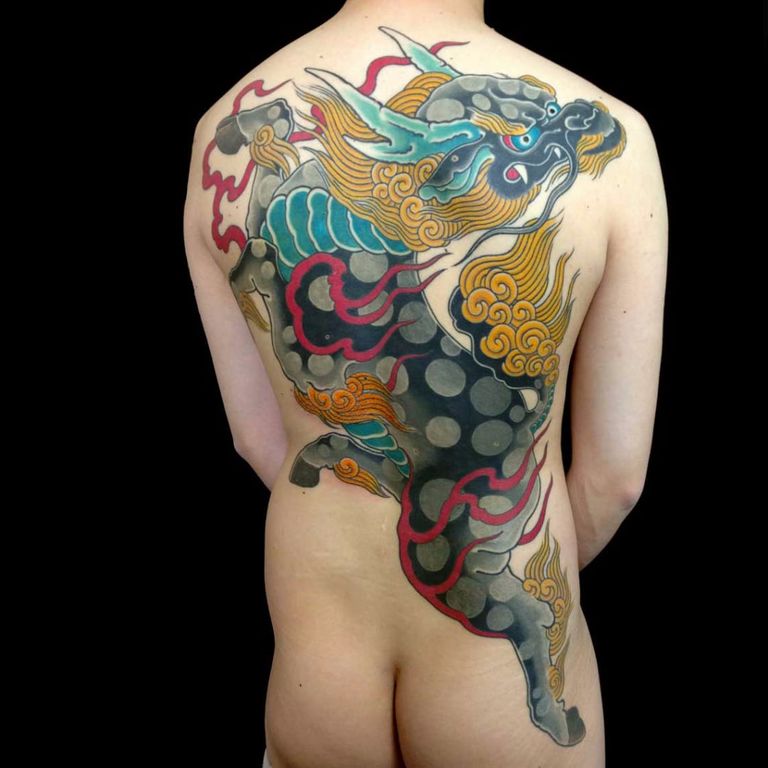
Beyond these sit heroes from the Suikoden prints, Buddhist figures, and the kirin, tengu and other mythological creatures of Japanese irezumi.
Tebori and machine work
Tebori is tattooing by hand. The tattooer uses a row of needles bound to a handle. It’s slower than a machine, and far fewer artists offer it. Most Japanese tattoos today are done by machine, and some artists mix the two. If you want tebori, ask for it outright and look for healed hand-done work.
Neo-Japanese tattoos
Neo-Japanese keeps the subjects and flowing layout of irezumi but changes the drawing. Expect bolder lines, pushed proportions, a wider palette or heavy black and grey. It borrows from the neo-traditional tattoo style. If you want a Japanese subject without a strict traditional look, search portfolios for this term.
How Japanese tattoos age, and where they fit
Japanese work ages well because of how it’s built. Bold outlines keep their shape, and solid black backgrounds hold their contrast. The subjects are big, so small details can soften without losing the picture. Color fades faster than black, so bright areas may need a touch-up in time.
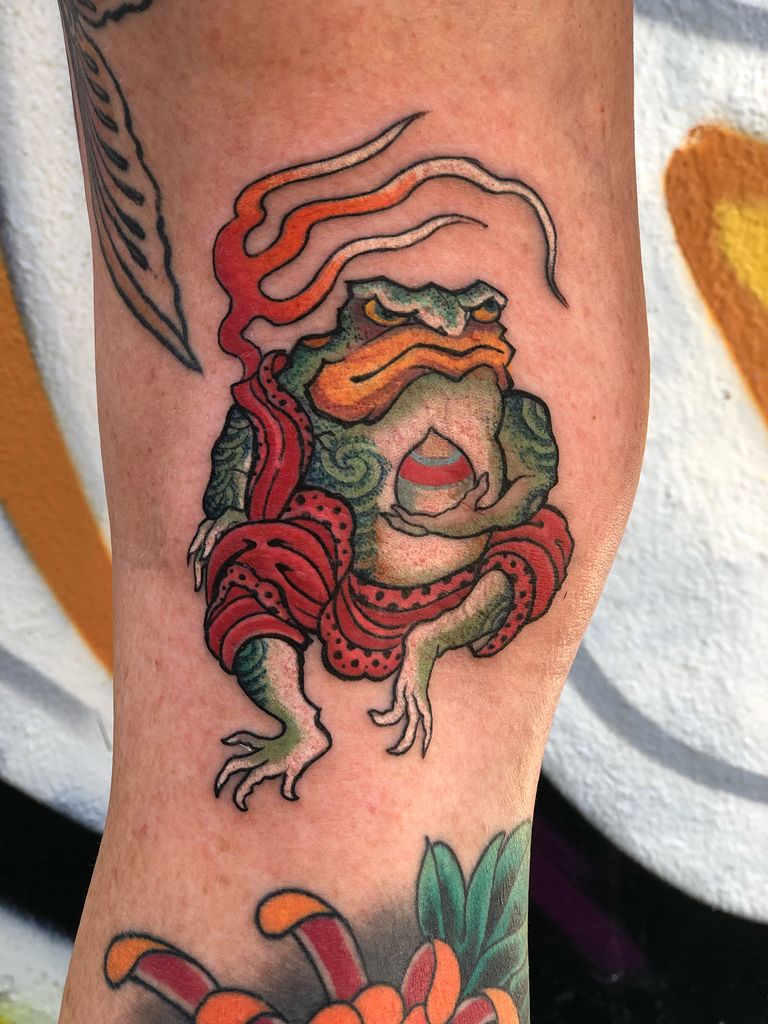
A single koi or peony on a forearm works if it’s simple and given room. A detailed scene squeezed into a palm-sized space will blur.
Tattoos in Japan today
Tattooing is legal in Japan. A 2020 Supreme Court ruling settled that it isn’t a medical procedure.
Visible tattoos are still restricted in many places. In a 2015 Japan Tourism Agency survey, 56% of the hotels and inns that answered barred tattooed guests from shared baths. Many onsen, pools and gyms keep the ban. If you’re traveling, look for places that say they are tattoo friendly, or book a private bath.
Choosing an artist for Japanese work
Look for finished sleeves and back pieces in the portfolio, not just close-ups of single motifs. The background is the hard part. Check that the wind bars and waves are even and that the piece flows around the body. In healed photos, the big black areas should still be solid. Ask about the whole plan:
- How would you plan this if I later want a full sleeve or suit?
- How many sessions should I expect, and how far apart?
For more subjects and layouts, browse Japanese irezumi tattoo ideas, then use the artist finder to find someone who works in the style near you.
Cover image: Alex Shwed