Dark Art and Horror Tattoos: Imagery, Origins and Technique
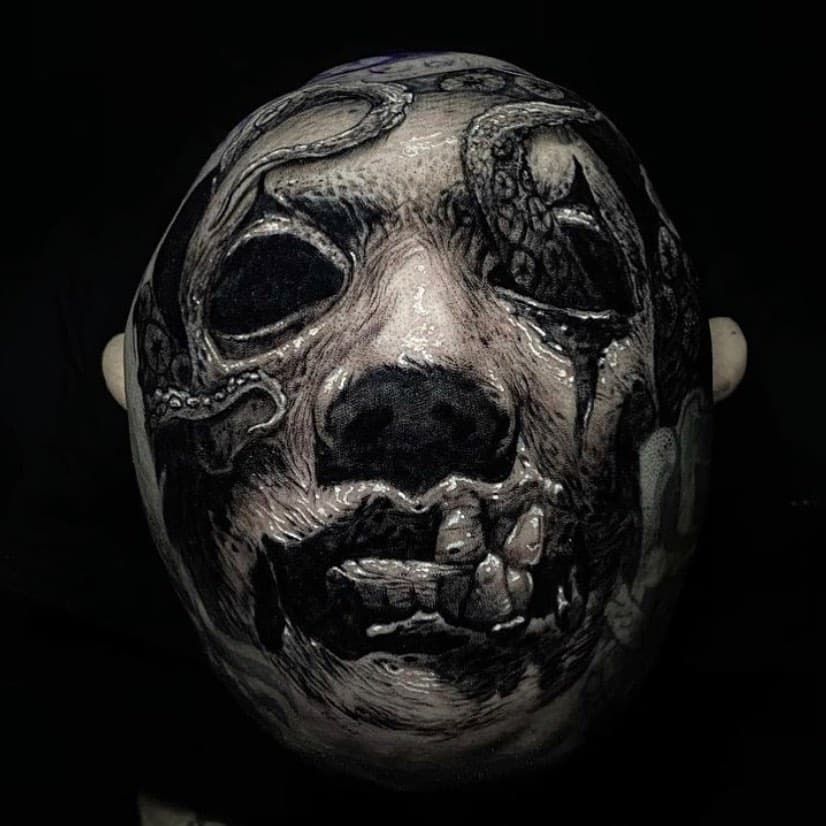
Demons, skulls, occult symbols and movie monsters: how dark art differs from horror tattoos, where the imagery comes from and how black and grey shading ages.
Related galleries
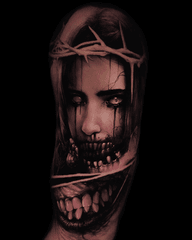
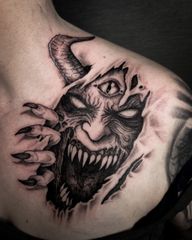
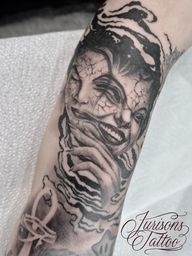
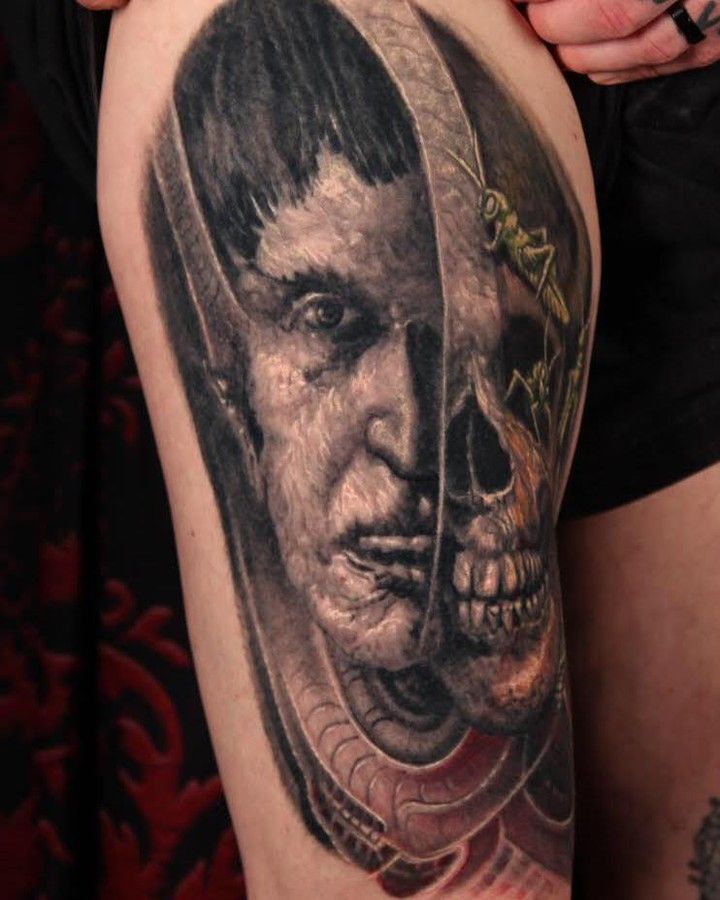
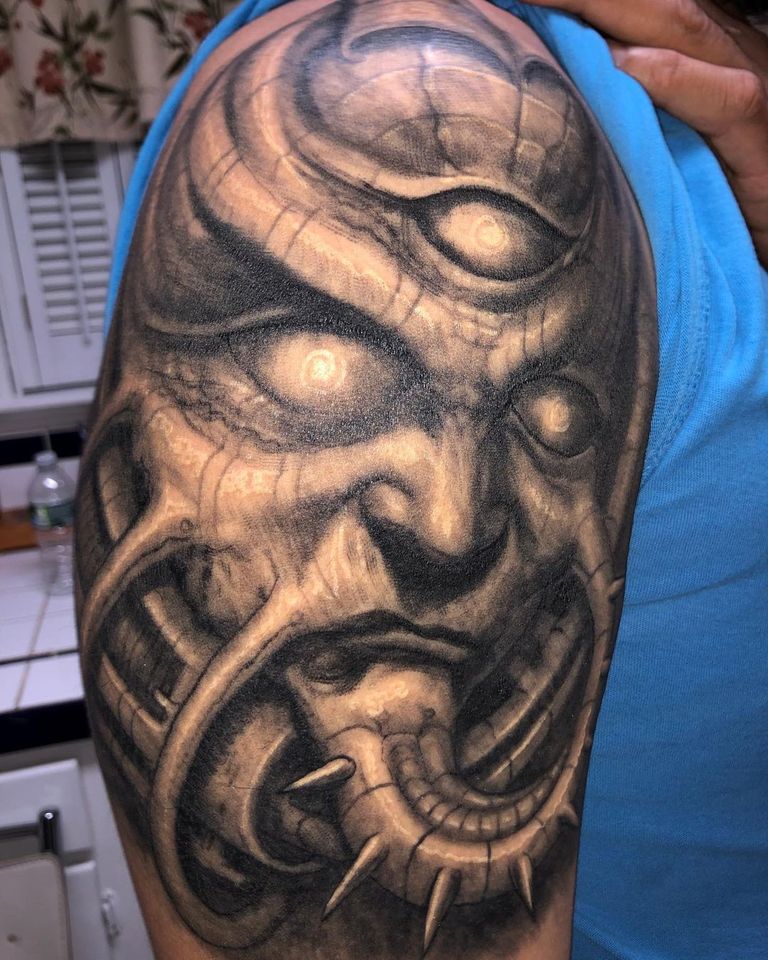
Dark art tattoos are black and grey pieces built from macabre, occult and surreal imagery: demons, skulls, screaming faces and alchemical symbols. Shading carries the design, with deep blacks set against smooth grey and very little outline. Most pieces are original drawings, not film characters. That’s what separates dark art from horror tattoos.
Summary
- The look comes from contrast and texture, not linework, so many pieces are drawn freehand on the skin.
- Faces and textures need room, so backs, thighs, calves and sleeves suit the style best.
- Solid black holds up best. The palest greys soften first.
What makes a tattoo dark art
- Black and grey. Most work uses black ink plus diluted grey, with bare skin as the brightest highlight. Some artists add one accent color, usually red.
- Shading over outline. Forms are built from soft gradients and hard shadows, the way a charcoal drawing is.
- Flowing composition. Shapes wrap around the forearm or run down the spine, so the piece fits one body part.
- Surreal subjects. Faces melt into skulls, flesh turns into bone or machinery, and creatures come from the artist’s head.
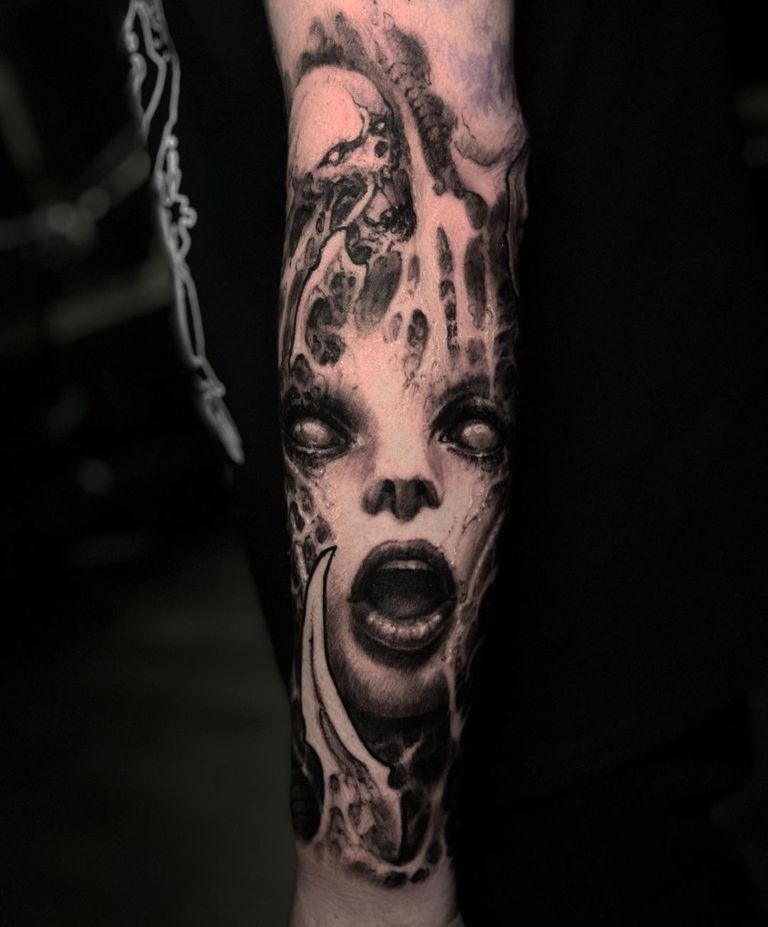
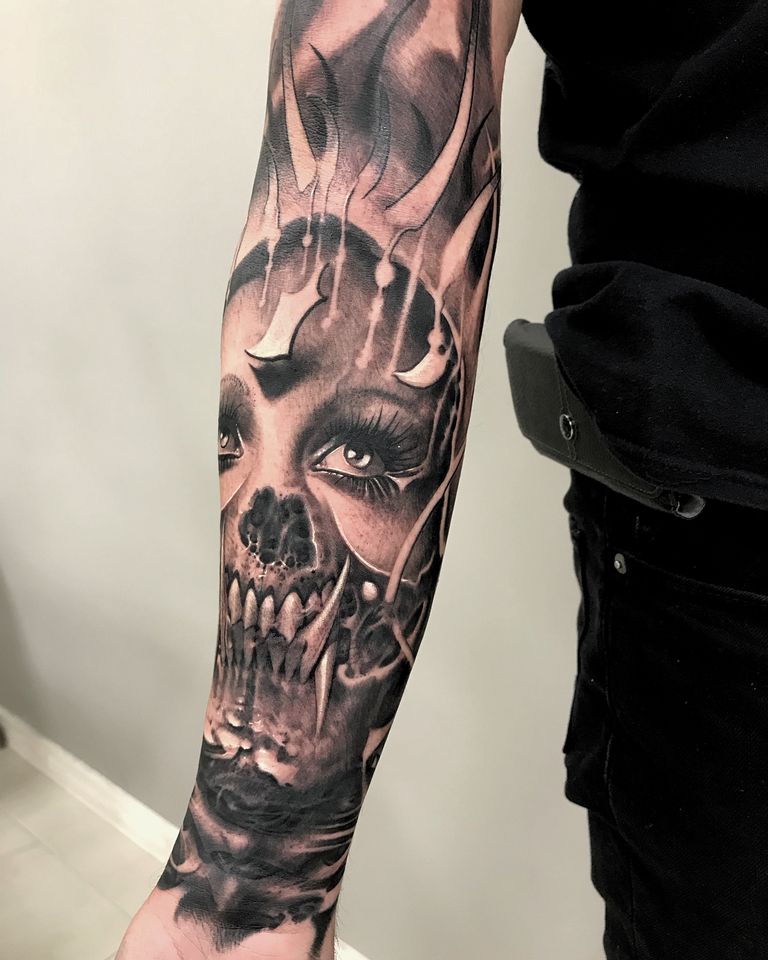
Dark art vs horror tattoos
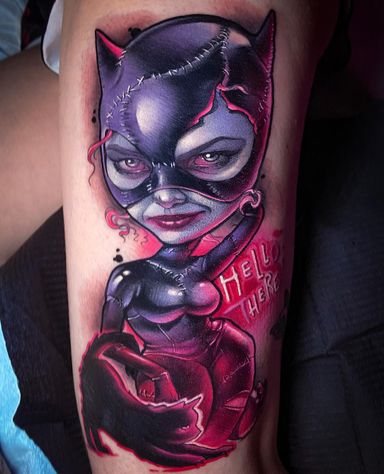
The two overlap, and many artists do both. A horror tattoo shows something you can name: Leatherface, Pennywise, Dracula, a poster from a film you love. It’s fan art, and the test is likeness. It’s also often in full color. A dark art tattoo borrows the mood of horror without a known character. The test is whether it works as a drawing in its own right.
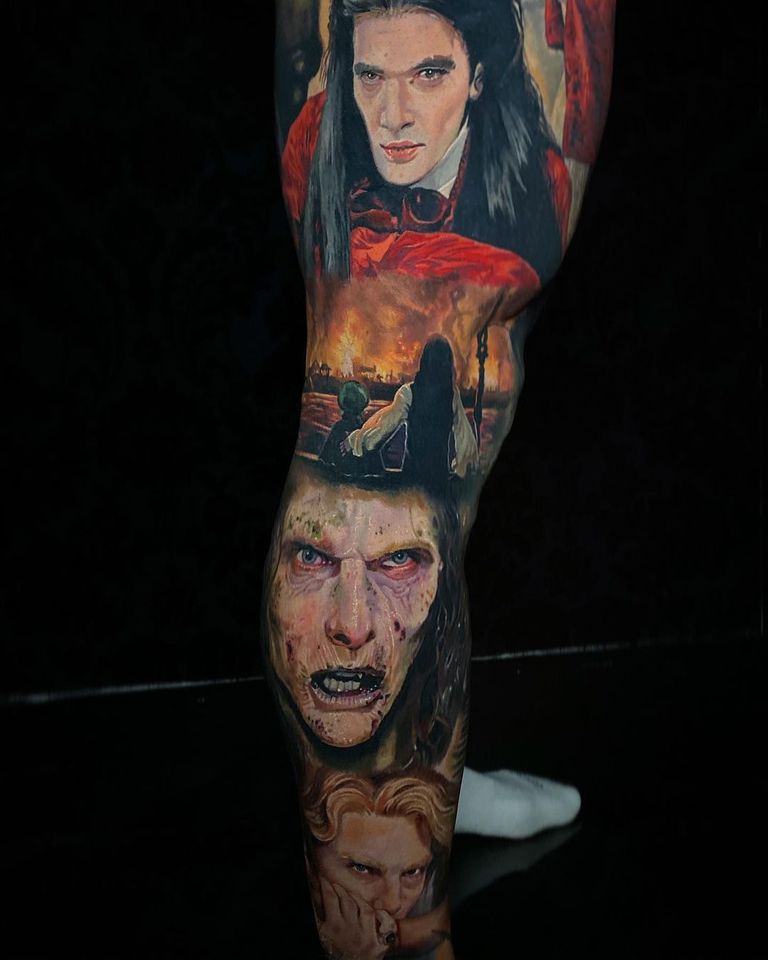
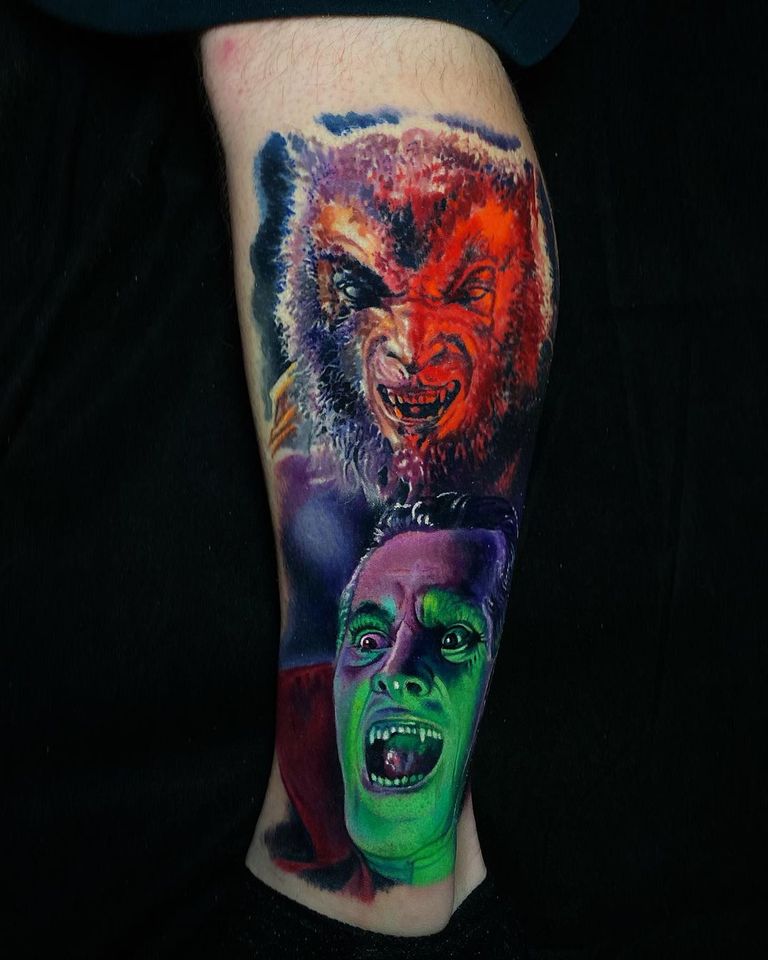
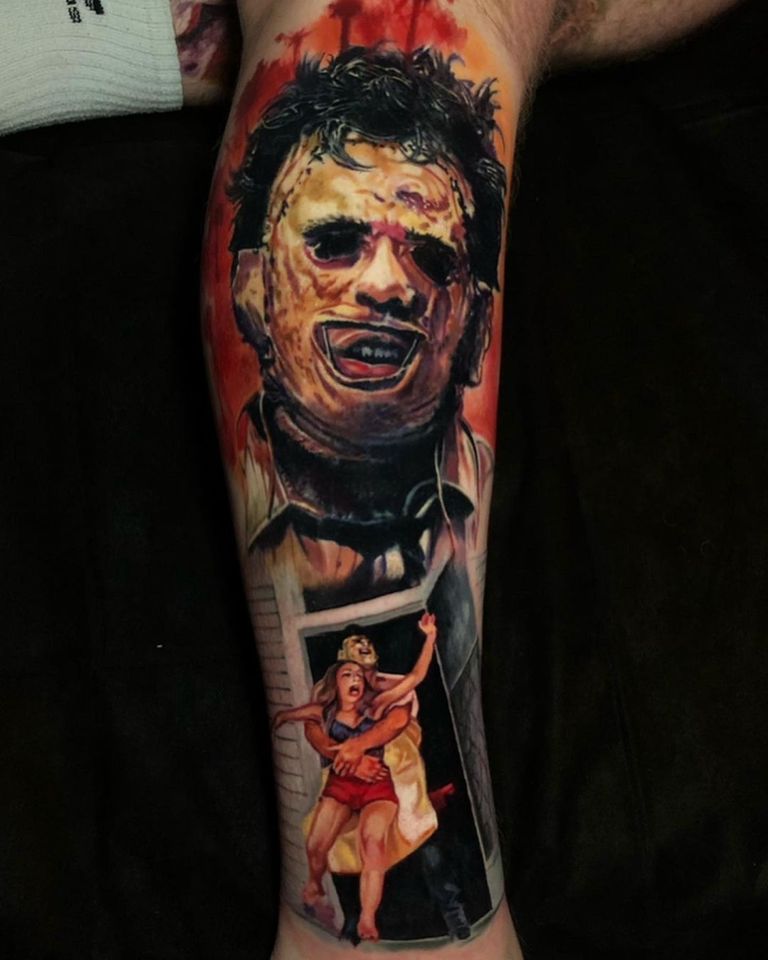
If you want a specific character, look for a horror realism artist and bring sharp stills. If you want something that feels like a nightmare but belongs to no film, you’re looking for dark art.
Where dark art tattooing comes from
The imagery is centuries old, from Bosch’s paintings of hell to the gargoyles on Gothic churches. Metal album covers carried it into the late 20th century.
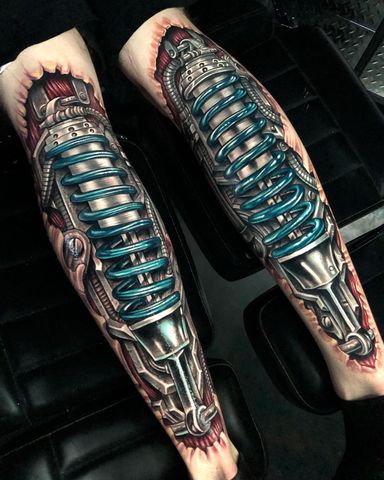
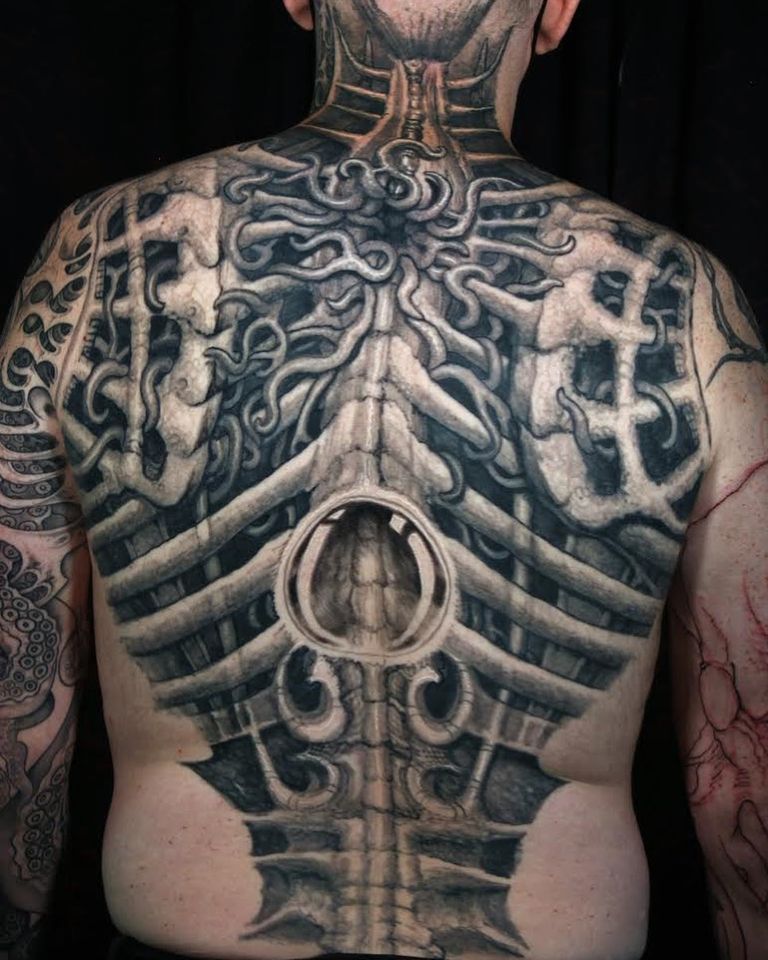
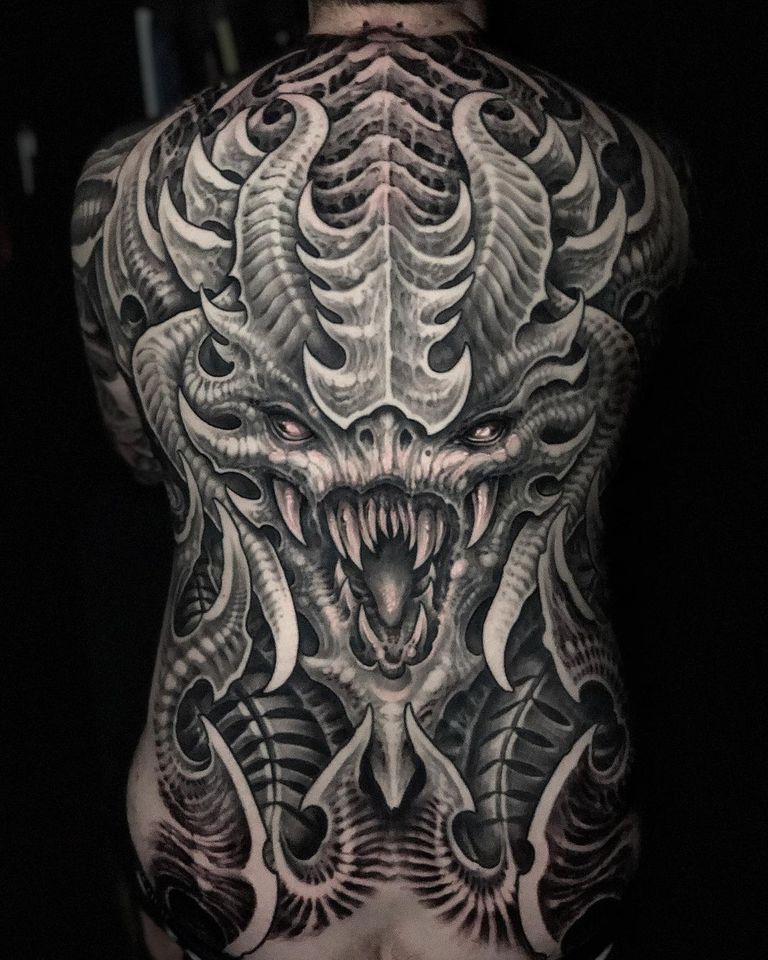
The most direct influence on the tattoo style is H.R. Giger. After his creature designs for Alien (1979), tattooers began developing biomechanical tattoos. Much of today’s dark art still mixes flesh with Giger-style tubes and ribs. The tattooer most tied to the style is Paul Booth, who opened his New York shop in the late 1990s. He is known for surreal black and grey work, often drawn freehand, straight onto the skin.
Common motifs and what they carry
Meaning in dark art is usually personal, and plenty of people pick an image because they love horror. Still, a few motifs come with history:
- Skulls are the old memento mori, a reminder that life is short.
- Demons stand for temptation, rage or the parts of yourself you’d rather not show.
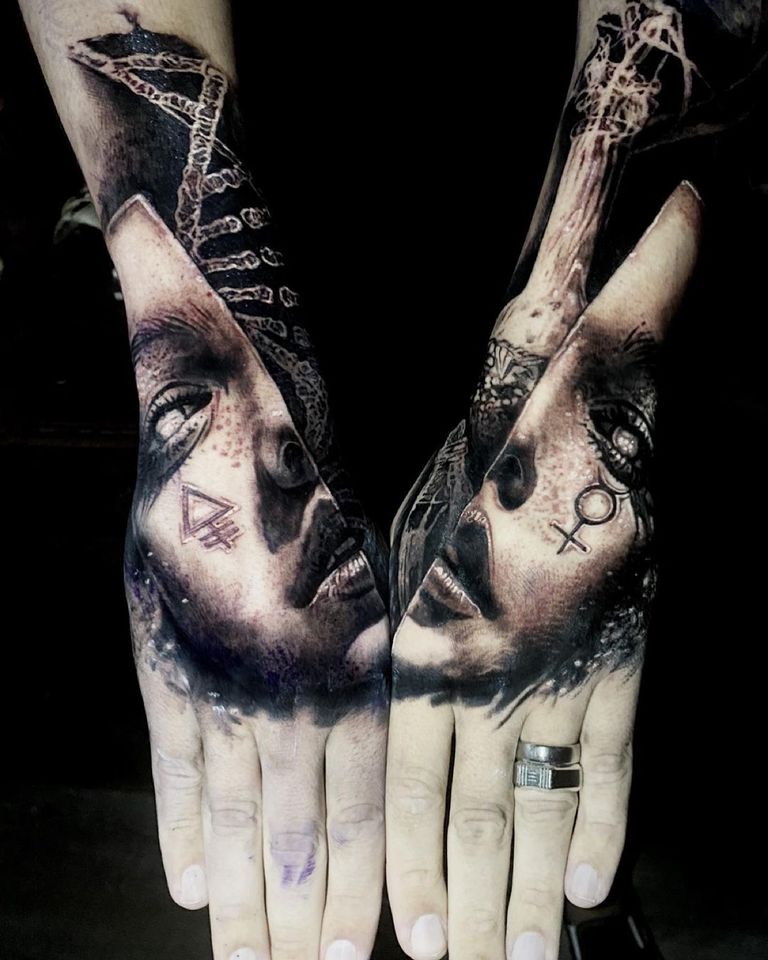
- Occult symbols, such as sigils and alchemical signs, come from ritual magic. Check what a symbol means before you commit to it.
- The grim reaper, ravens and witches bring in folklore and gothic fiction.
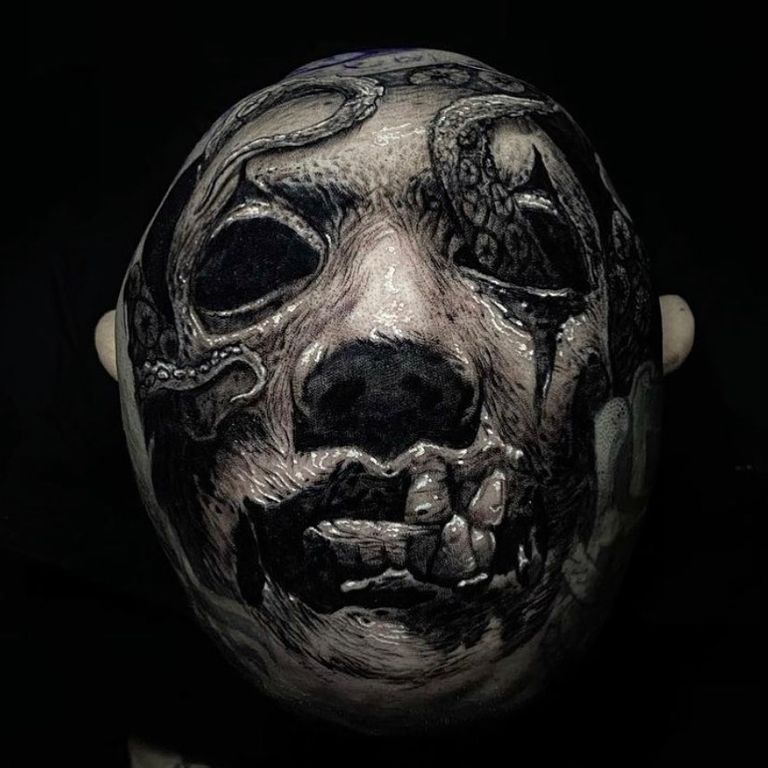
- Melting or screaming faces usually stand in for grief or anxiety.
How black and grey shading is done
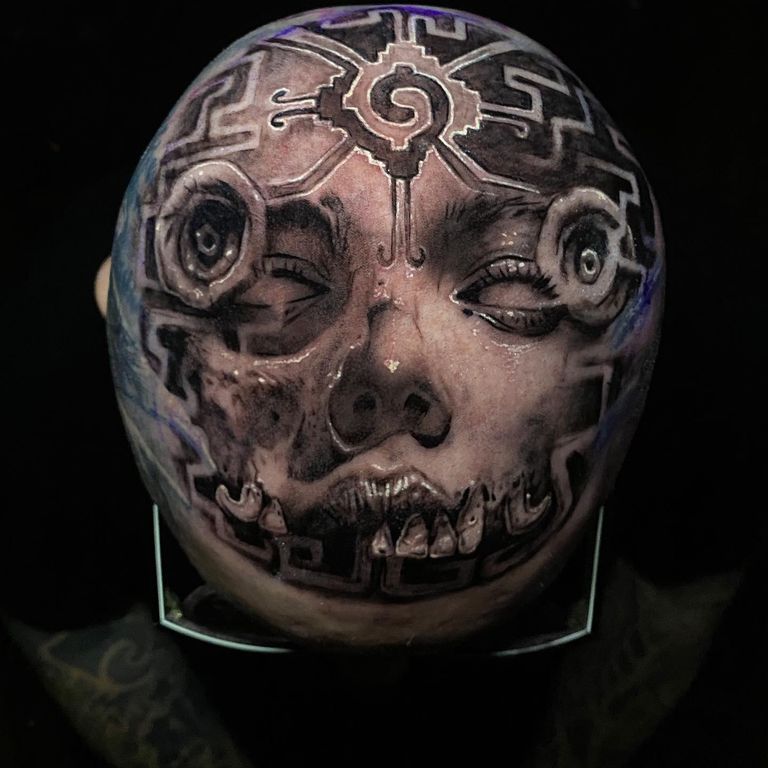
The artist builds tone with greywash, black ink diluted into lighter shades, laid in layers from dark to light. Smooth gradients come from soft, sweeping passes. Gritty textures like stone, bone or rot come from stippling. The brightest points are bare skin, so highlights are planned from the start.
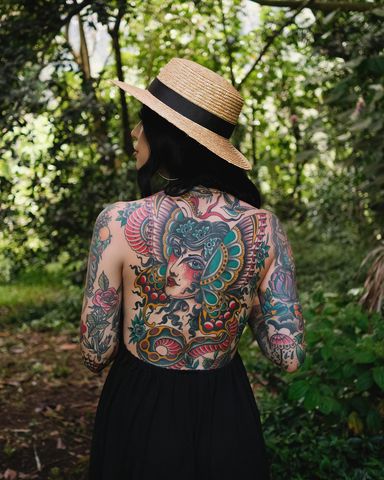
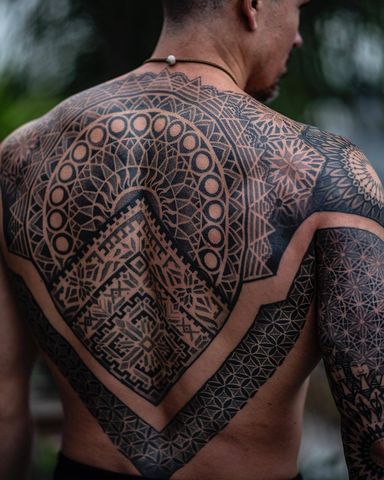
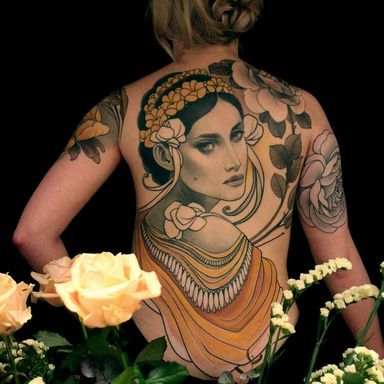
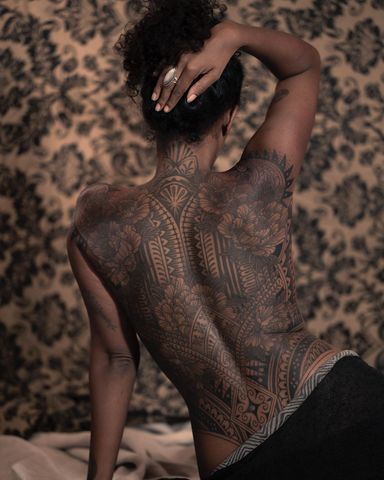
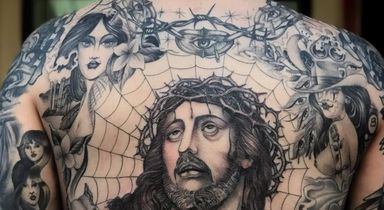
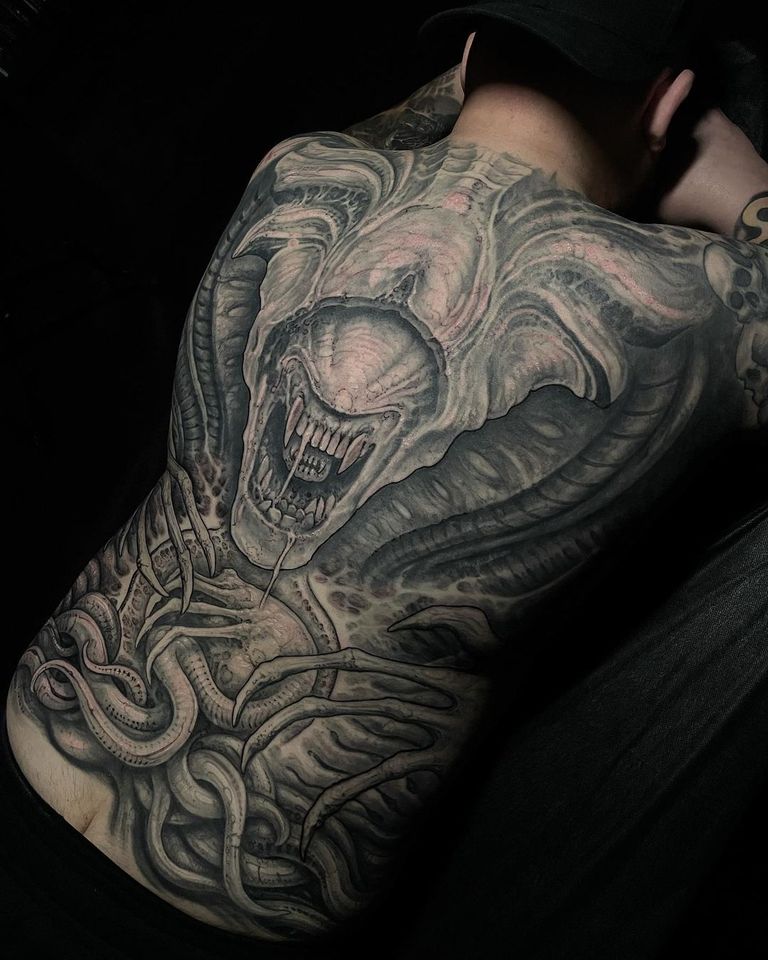
For big pieces, many artists skip the stencil and draw on the body with skin markers, so the design follows the muscles. A back piece like the one below usually takes many sessions over months.
Dark art borrows from neighboring styles. Blackwork uses solid black fills instead of soft greys. Realism shares the shading but aims at photo accuracy; dark realism is realism with darker subjects. Illustrative work keeps visible linework, which is how many smaller dark pieces are done.
How dark art tattoos age, and where to put them
Size matters most, because fine texture and small grey steps blur as a tattoo ages. A screaming face the size of a coin turns into a grey smudge. The same face across a forearm still reads in twenty years. Strong black shadows age best. The lightest washes fade first, and sun speeds that up.
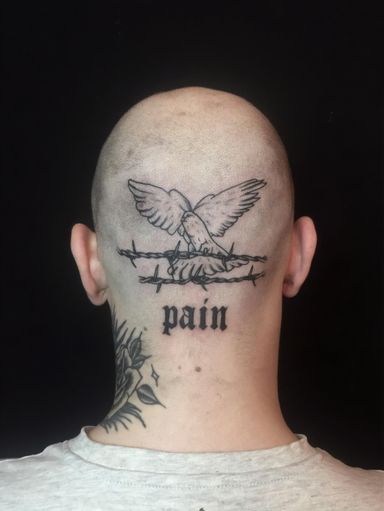
The full back, outer thigh, calf, forearm and upper arm give the style room. Hands, neck and scalp work too, but hands fade faster and all three put the imagery in front of everyone you meet.
A visible demon gets reactions that a rose doesn’t. If you’re unsure, start somewhere you can cover, such as the back or thigh. Move to hands or neck once you know how it feels to wear the imagery every day.
Choosing a dark art artist
Most dark art is custom, so the artist’s own drawing matters more than any reference you bring. Check for:
- Healed photos of their grey work, to see that the highlights still read.
- Original pieces. A portfolio of movie portraits means a horror realist, great for a character but not for a surreal original.
- How they plan it. Ask about freehand or stencil, how many sessions, and how much creative freedom they want.
Browse dark art tattoo ideas for mood rather than a design to copy, then find an artist in the artist finder and give them a theme and a loose brief.