Can You Get a Tattoo While Pregnant?
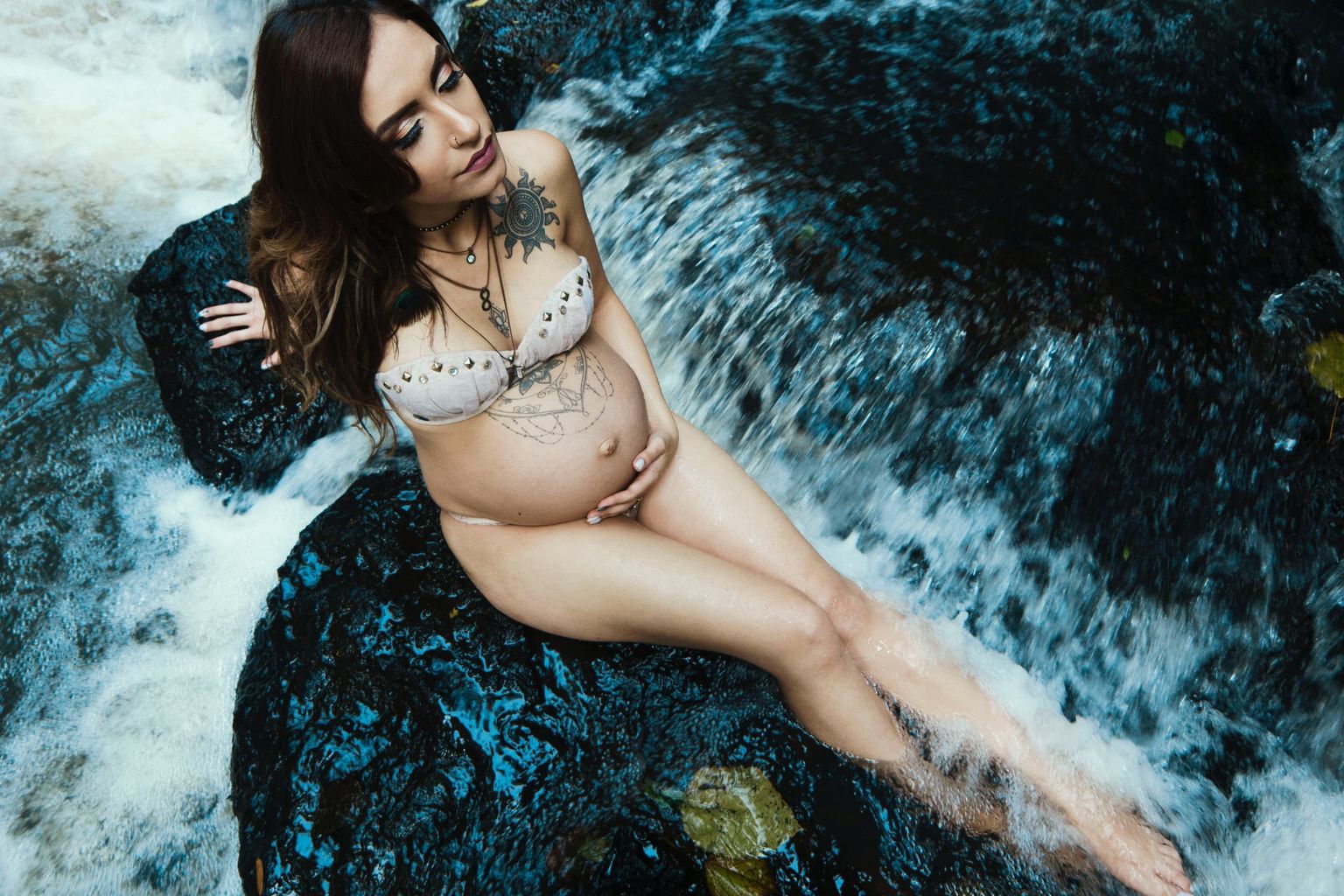
Why many artists won’t tattoo you while you’re pregnant or breastfeeding, when to book again, and how pregnancy stretches the tattoos you already have.
Related galleries
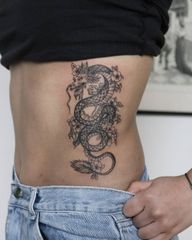
Doctors and midwives generally advise against getting a tattoo while pregnant, and many artists won’t do it. A tattoo is a wound, so it carries a small risk of infection. That includes viruses carried in blood, such as hepatitis B, hepatitis C and HIV, which can pass to a baby. Nobody has studied what tattoo ink does in pregnancy either. Ask your doctor or midwife, and plan the tattoo for after you’ve finished breastfeeding.
Summary
- Studio consent forms often ask whether you’re pregnant or breastfeeding.
- For belly, hip or breast pieces, wait until your weight has settled after the birth.
- Belly, hip and breast tattoos can stretch and pick up stretch marks, while arm and lower-leg tattoos rarely change.
- A lower-back tattoo usually isn’t a reason to rule out an epidural.
Is it safe to get a tattoo while pregnant?
Every tattoo breaks the skin, and broken skin can get infected. At a licensed studio with single-use needles, fresh ink caps and gloves, the risk is low, but it isn’t zero. Doctors worry most about the viruses that can reach the baby, though skin infections from bacteria are more common. A small tattoo carries the same risks.
Then there’s the ink. In the US, tattoo inks are regulated as cosmetics, and no pigment has been approved for injection into the skin. Little is known about how tattoo dyes affect a developing baby.
Pregnancy also stretches the skin on your belly, hips and breasts, so a design tattooed there now won’t keep its shape. Long sessions mean holding still for hours, which gets harder as the weeks go on. A tattoo is never urgent, so many artists ask you to come back once you’ve finished breastfeeding.
What if you got tattooed before you knew you were pregnant?
It happens, so don’t panic. Tell your doctor or midwife when and where you were tattooed. The routine prenatal blood test usually already screens for hepatitis B, HIV and syphilis. In the US, a hepatitis C test is usually added too. If the studio wasn’t licensed or you doubt its hygiene, say so, and ask your doctor whether you need more tests. See a doctor quickly if you notice spreading redness, heat, swelling, pus or a fever. Otherwise, look after it as you would any tattoo. Our tattoo aftercare guide covers the basics.
Can you get a tattoo while breastfeeding?
Most experts recommend waiting until you’ve finished breastfeeding. No harm to babies has been reported, and the risk of an infection passing through breast milk is thought to be very low, but ask your doctor or midwife. Many artists still won’t do it.
A fresh tattoo is also a healing wound for the first few weeks, often right where a baby feeds and grabs. And if you donate breast milk, milk banks usually won’t accept it for several months after a new tattoo.
When can you get a tattoo after pregnancy?
There’s no fixed date. Check these things before you book:
- You’ve finished breastfeeding.
- Your doctor or midwife has no concerns about your recovery. After a C-section, wait until the scar has fully healed before tattooing on or near it.
- For the belly, hips or breasts, your weight has been stable for a while and new stretch marks have faded to pale.
- For a belly piece, you aren’t planning another pregnancy soon.
Arms, lower legs, feet and the upper back change little in pregnancy. They’re the best spots if you want a tattoo while you’re still planning a family. When you’re ready for a stomach piece, browse stomach tattoo ideas.
How pregnancy changes the tattoos you already have
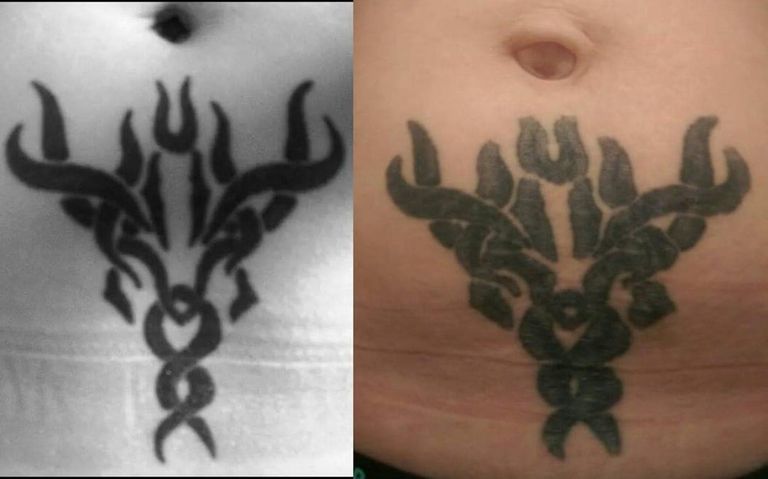
Tattoos on the belly, hips, upper thighs and breasts stretch as your body changes. A design on the side of the stomach widens as the bump grows, then shrinks back after the birth. How close it gets to its old shape depends on your skin, how far it stretched and where it sits.
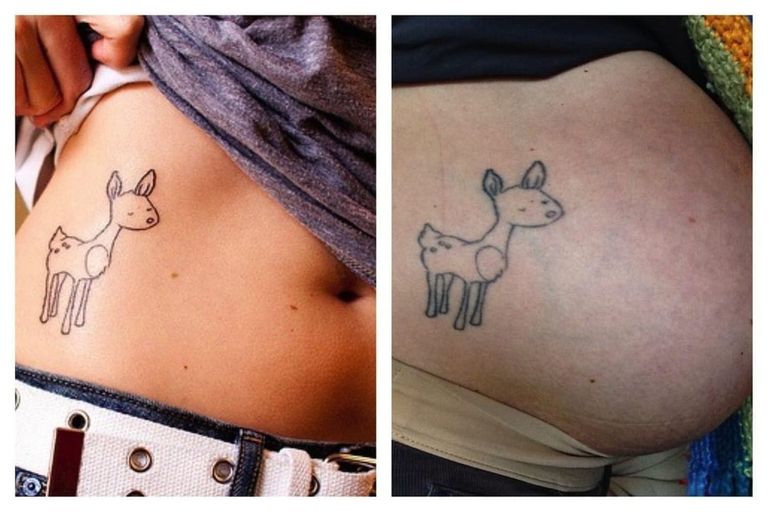
What tends to stay are stretch marks. They affect around 8 in 10 pregnant women1. After the birth they fade to paler lines, but they probably won’t go away completely. Where a stretch mark runs through a tattoo, that line stays visible.
Can you stop a belly tattoo from stretching?
Not reliably. Stretch marks come from skin stretching quickly, and they run in families. There’s little evidence that oils or creams prevent them. A fragrance-free moisturizer can still ease the itchy skin of a growing bump. Ask your midwife or pharmacist before using anything new, since some creams aren’t recommended in pregnancy.
If a tattoo does change, an experienced artist can often touch it up, rework it or cover it once your skin has settled. Our guide to cover-up tattoos explains what’s possible.
Can you have an epidural with a lower-back tattoo?
In most cases, yes. The worry was that the needle could carry a tiny plug of inked skin into the space around the spinal cord. But 18 years of medical reports2 show no convincing complication from an epidural placed through a tattoo.
Some doctors still place the needle through a patch of skin without ink, and hospital policies vary. Mention the tattoo at a prenatal appointment so it isn’t a surprise during labor. A tattoo that is still healing is a different matter. That’s one more reason not to get a lower-back tattoo late in pregnancy.
Is henna safe while you’re pregnant?
Plain henna stains the skin reddish-brown and fades within a few weeks. The FDA has approved henna only as a hair dye, not for use on skin. It warns against “black henna”3, which often contains a hair dye that can cause dangerous skin reactions. Skip black henna, pregnant or not. If you want plain henna, ask your midwife or doctor first, and use an artist who can tell you what’s in the paste.
Once you’ve stopped breastfeeding and your skin has settled, use the artist finder to find someone near you. If the new tattoo will go over stretch marks or a C-section scar, ask to see healed work they’ve done on skin like yours.