When Can You Put Sunscreen on a New Tattoo?

When a new tattoo can take sunscreen, which SPF to use once it has healed, how often to reapply, and how sun and sunbeds fade ink.
You can put sunscreen on a new tattoo once it has stopped peeling and the skin has healed over. That’s usually about 2 to 4 weeks after your appointment. Until then, keep it covered with loose clothing and out of direct sun.
Summary
- While it heals, cover the tattoo with loose clothing instead of sunscreen.
- Once healed, use a broad-spectrum, water-resistant sunscreen of SPF 30 or higher.
- Reapply every two hours outdoors, and straight after swimming or sweating.
Can I put sunscreen on a new tattoo?
Not while it’s healing. For the first few weeks your tattoo is a wound that is still closing. Sunscreen is made for intact skin, so rubbing it into a healing tattoo can irritate it. Direct sun is no better. Healing skin burns easily, and a burn that blisters can take ink with it.
So for the first weeks, protection means covering up. Wear loose, breathable clothing over the tattoo and stay in the shade. Don’t tape plastic wrap over it to sit in the sun.
The tattoo is ready for sunscreen when the peeling has stopped, there are no scabs, and the skin feels as smooth as the skin around it. Shiny, raised or tender patches mean it isn’t there yet. Big pieces, like a back or a full sleeve, often take longer than 4 weeks. Our guide to how long a tattoo takes to heal walks through each stage. If you aren’t sure, ask your artist.
What sunscreen should I use on a tattoo?
Any good sunscreen works on a healed tattoo. Look for three things on the label: broad spectrum, water resistant, and SPF 30 or higher1. SPF only measures protection from UVB. UVA reaches deeper, down to where the ink sits. Broad spectrum means it blocks both.
- SPF 30 filters about 97% of UVB rays. Higher numbers block a little more, but none block it all.
- For sensitive skin, choose a mineral sunscreen, with zinc oxide, titanium dioxide or both.
- Lotion is easier to spread evenly. If you use a spray, rub it in afterwards.
- So-called “tattoo sunscreens” are regular sunscreens. You don’t need one.
How often should I reapply sunscreen on a tattoo?
Put it on about 15 minutes before you go outside. Reapply at least every two hours, and right away after swimming, sweating or toweling off. No sunscreen is waterproof.
Use more than you think. Most adults need about a shot glass full to cover all the skin their clothes don’t. A thin smear over the tattoo won’t give you the protection on the label.
Does the sun fade tattoos?
Yes. Every tattoo softens with age, and sunlight speeds that up. UV light breaks down some tattoo pigments in the skin, which accounts for part of the fading. A forearm that sees sun every summer will look duller over the years than a tattoo on your back.
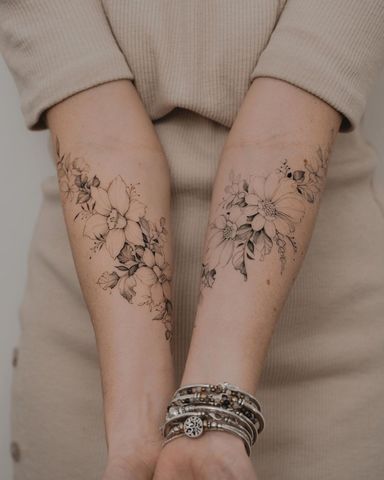
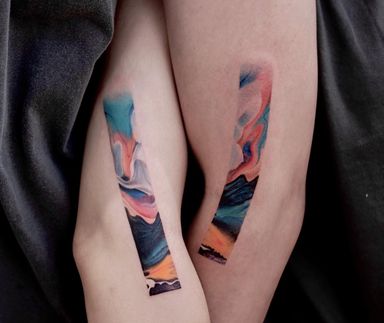
Black and dark gray hold up longest. Pale colors, white highlights and soft washes, like those in watercolor tattoos, show sun damage first. Fine lines are the other weak spot, because a thin line holds less ink. For a light or very fine piece on a sunny spot, ask your artist how it will age there.
Sun can also cause a reaction in some tattoos. The skin around the ink swells and turns red, most often in yellow ink and sometimes in red2. If that happens, see a dermatologist.
Can I tan or use a sunbed with a tattoo?
Not with a new one, and preferably not with a healed one either. Stay away from sunbeds, because they can fade tattoos and raise your risk of skin cancer. A tan also darkens the skin around the ink, so the tattoo loses contrast. If you tan outdoors anyway, keep sunscreen on the tattoo.
Can I go swimming with a new tattoo?
Not until it has healed. Pools, hot tubs, the sea and lakes all mean soaking an open wound, which raises the risk of infection. Quick showers are fine. Wait for the same signs as for sunscreen: no scabs, no flaking, smooth skin.
What to do if your new tattoo gets sunburned
Get out of the sun and keep the tattoo covered. Cool it with cool, not icy, water, pat it dry, and carry on with your artist’s aftercare. Don’t pop blisters or pick at peeling skin, because that’s how ink comes out.
A burn slows healing, and a blistered patch may heal patchy. See a doctor if the burn blisters over a large area, or if you see signs of infection: spreading redness or heat, pus, red streaks, or a fever. Once it has healed, ask your artist whether a touch-up can even out any patchy areas.
For the rest of the healing weeks, from washing to moisturizing, follow our tattoo aftercare guide.